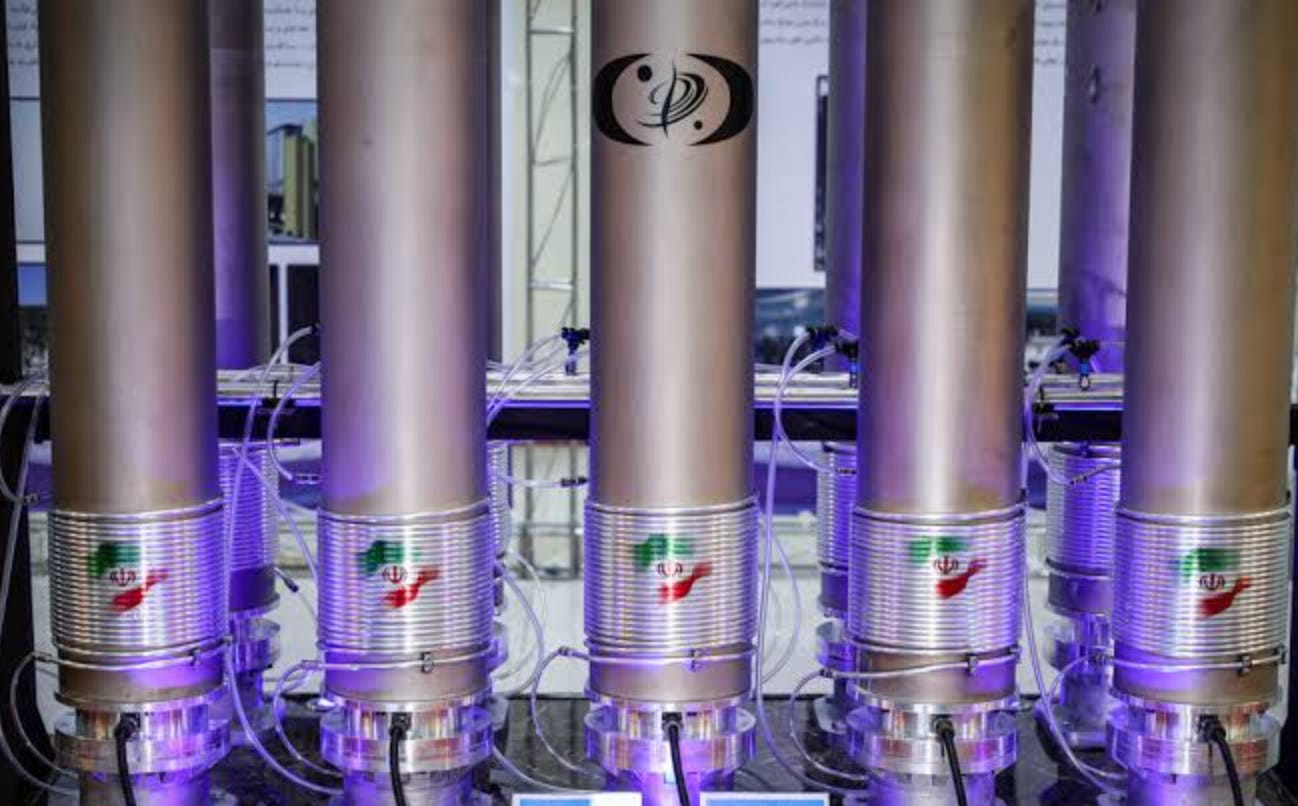
The War Didn’t End Iran’s Nuclear Problem — It Concentrated It
Bombing Iran's nuclear facilities destroyed buildings. It didn't account for the enriched uranium. That's where the real contest now sits.
Iran’s strongest card is no longer hidden in a reactor hall or an enrichment facility.
It is the uranium itself.
That appears to be the problem left behind by the strikes on Iran’s nuclear program. The natural question after military action is whether the targets were destroyed.
Were the centrifuges damaged? Were the tunnels collapsed? Were the facilities disabled? Those questions matter. But they are not decisive.
The decisive question is simpler: where is Iran’s highly enriched uranium, how much of it remains, and can anyone outside Iran verify the answer?
That is where the Iranian nuclear confrontation now sits.
For years, the public argument over Iran’s nuclear program has moved between two familiar claims. One side warns that Iran is racing toward a bomb.
The other insists there is no proof Tehran has made a final decision to build one. Both claims can contain truth and still miss the central issue.
The issue is not that Iran has publicly been proven to possess a nuclear weapon. It has not. The issue is that Iran has accumulated uranium enriched to 60 per cent, far beyond normal civilian use and only a short technical step from weapons-grade enrichment.
The International Atomic Energy Agency has said Iran is the only non-nuclear-weapon state under the Non-Proliferation Treaty to have produced and accumulated uranium enriched to that level.
That fact alone does not prove a bomb. But it does change the nature of the risk.
A nuclear weapons program has several parts. It needs fissile material. It needs weaponisation work. It needs delivery systems. It needs command, control, concealment and political authorisation.
Publicly reported U.S. intelligence assessments have not concluded that Iran already has a finished nuclear weapon, but the reported timelines are measured in months, not years.
Iran does not need to possess a finished bomb for its enriched uranium stockpile to become the dominant strategic fact.
Once enough material exists, and once inspectors cannot verify its location, status and custody, the argument changes. It is no longer only about whether Iran can produce more uranium. It is about whether anyone outside Iran can account for the uranium already produced.
That is the point military action cannot automatically solve.
Bombing an enrichment facility may degrade capacity. It may delay future production. It may impose costs. It may destroy equipment. But uranium is not a building.
If material survives, is moved, buried, hidden or placed beyond inspection, then the military strike may damage infrastructure while leaving the central strategic asset unresolved.
That appears to be the problem now facing Washington, Europe and the IAEA.
Reuters has reported that Iran had 440.9 kilograms of uranium enriched up to 60 per cent before the attacks on its nuclear facilities. It has also reported that how much of that stockpile survived remains unclear.
That uncertainty is not a minor procedural gap. Verification is the whole point of the non-proliferation system. Without access, the world is left with estimates, assumptions and Iranian statements. Those may be useful. They are not verification.
This is why the enriched uranium stockpile has become more than a technical issue. It has become Tehran’s central bargaining chip.
In May, Reuters reported that Iran’s Supreme Leader had directed that Iran’s near-weapons-grade uranium should not be sent abroad. That matters because removal of the stockpile has been one of Washington’s central demands.
If the uranium stays inside Iran, then the dispute is not merely about future enrichment. It is about whether the existing stockpile can be diluted, destroyed, exported, sealed, monitored or otherwise placed beyond military use.
Tehran understands the leverage. So does Washington.
That is why the diplomatic track is now organised around the same unresolved point. The United States has pushed the IAEA to demand disclosure of Iran’s enriched uranium stocks and access to bombed nuclear sites.
The IAEA Board of Governors has backed a resolution requiring Iran to report what remains and allow inspectors to verify it.
The bureaucratic language can obscure the gravity of the matter. “Access.” “Disclosure.” “Safeguards.” “Stocks.” These words sound administrative. They are the difference between a nuclear program constrained by inspection and one assessed by guesswork.
This is the deeper failure of treating the Iranian nuclear issue as a binary question.
The question is not simply: does Iran have a bomb?
A more precise question is: does Iran possess enough highly enriched uranium to make the bomb question materially different?
Another is: can inspectors verify where that material is?
Another is: can diplomacy remove or neutralise it?
And another is: if Iran refuses, what exactly has the war achieved?
None of this means the strikes were useless. They may have damaged Iran’s nuclear infrastructure. They may have reduced its enrichment capacity. They may have imposed real costs on a regime that has spent years expanding a program Western governments and many non-proliferation experts say has no credible civilian justification for enriching uranium to 60 per cent, a level the IAEA has described as a matter of serious concern.
But damaging capacity is not the same as resolving custody.
That is the strategic trap. If Iran’s infrastructure is damaged but its uranium survives, Tehran may emerge with fewer visible facilities but a more politically powerful asset: a stockpile close enough to weapons-grade to matter, hidden enough to alarm, and valuable enough to trade.
The most serious argument does not require claiming Iran already has a bomb. In fact, that claim weakens the argument if it outruns the evidence. The stronger position is that Iran does not need to have a bomb for the current situation to be dangerous.
It needs only three things: a significant 60 per cent stockpile, degraded inspection access, and a refusal to surrender the material.
Those three facts are enough to make the stockpile the central issue.
The war may have damaged buildings. It may have destroyed equipment. It may have delayed future enrichment. But unless the enriched uranium is accounted for, inspected and neutralised, the core problem remains.
Iran may not have a nuclear weapon.
But it has something almost as powerful in diplomatic terms: a near-weapons-grade stockpile that inspectors cannot fully verify and diplomats have not yet removed.
That is the story after the strikes.
The nuclear question was not settled by force. It was concentrated into a smaller, harder, more dangerous problem: the uranium itself.
Credit: John Maricic