


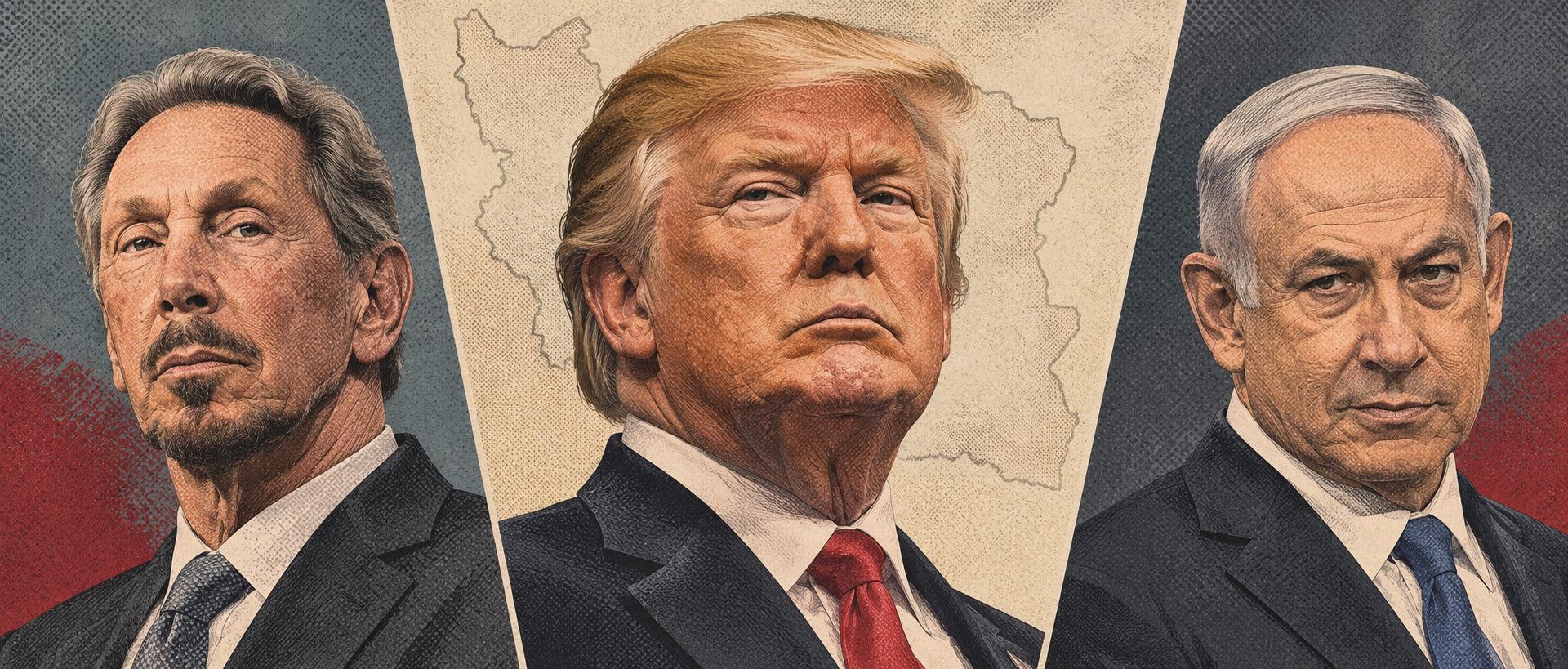
On January 3, Democrats take control of both chambers of Congress. They’ll decide what comes to a vote, what to investigate and what conditions to seek on new funding for the war. Trump remains commander-in-chief. If he widens the war before the handover, the incoming majority will inherit the consequences.
Trump had already considered another round of strikes. Reuters reported on November 14 that, before the midterms, he had told Saudi Crown Prince Mohammed bin Salman he planned to attack after the election. Israeli Prime Minister Benjamin Netanyahu was pressing him to resume strikes, according to a US official. Trump later told advisers he might hold off unless Iran or the Houthis provoked a response.
The war was already a political liability. Vice President JD Vance blamed it for the Republicans’ midterm defeat. In a Reuters/Ipsos poll, 71 per cent of Americans said they wanted Congress to pass legislation ending it.
Two days after the Reuters story, CNN raised a different question. What if the war reaches Washington?
CNN reported that US intelligence indicated Iran was developing plans to target senior Trump administration officials in Washington with a dirty bomb or a chemical weapon. The network cited seven unnamed US officials. Two said the alleged plans identified specific sites and targets. US officials held meetings to prepare for the possibility.
CNN’s sources said Iran was keeping its options open. Officials disagreed over whether it could carry out an attack and whether it would. The White House said there were no credible threats to the US homeland at the time. Iran’s foreign ministry denied the allegation.
Asked about the report on November 17, Trump said his administration was looking into it. When pressed on whether an attack was imminent, he warned that Iran would pay an unprecedented price if it was.
CNN itself raised the possibility that an attack on US soil could be a consequence of the war Trump and Israel began in February. That same war was still being fought in the Gulf. On November 17, Iran said it targeted a US military radar installation in Bahrain. The US then struck an Iranian missile launch site. A US military official said the strike was a response to Iranian attacks on US personnel and assets in the region.
Where Ellison comes in
Paramount completed its acquisition of Warner Bros. Discovery on October 6, bringing CNN and CBS News under the same corporate roof. David Ellison runs the combined company. His family holds the largest equity stake and shares voting control with RedBird Capital Partners.
His father, Oracle co-founder Larry Ellison, personally guaranteed US$40.4 billion in equity financing for Paramount’s December 2025 bid. He donated US$16.6 million to Friends of the Israel Defense Forces in 2017 and hosted Netanyahu and his family in Hawaii in 2021.
Iran’s parliament speaker, Mohammad Bagher Ghalibaf, accused CNN and The New York Times of promoting false-flag claims and alleged that Ellison was behind the coverage. The ownership stake and Larry Ellison’s ties to Netanyahu are public. Ghalibaf’s allegation remains unsubstantiated, as does any suggestion that Israeli officials supplied the intelligence.
The question CNN’s reporting leaves open is how many sources of evidence lay behind those seven officials. Did they have independent evidence, or were they all briefed on the same intelligence?
What the maps can show
The day CNN published its report, The New York Times examined a theory about Iran’s dams. Analysts had noticed that airstrikes on suspected underground missile sites hit some of the same areas where Iran had built water projects. The Times called the connection speculative.
Geography could explain some of the overlap. Mountainous terrain offers rock to excavate for underground facilities and valleys to dam. Establishing a military connection would require evidence about what a particular dam actually supplies.
The Times reported no US or Israeli plans to strike dams. Trump has previously threatened to hit Iranian power plants. In that context, even a speculative claim about military use can change how readers see civilian infrastructure.
Any assessment of a strike would also have to account for civilians downstream. The International Committee of the Red Cross identifies a rule of customary international law requiring particular care when attacking dams or nearby installations to avoid releasing dangerous forces and causing severe civilian losses. Article 56 of Additional Protocol I sets out more specific protections. The US, Israel and Iran aren’t parties to that protocol.
What the outages show
From November 12 to 17, Microsoft 365 services went down, the FAA halted departures nationwide, Chase transactions were delayed and United suffered a separate systems outage. CNN reported a disruption to the NSA’s internal communications. Workday, AWS, Claude and Apple also reported service problems.
A week of failures can make warnings about a threat at home feel more plausible. The first question is how many of those failures were independent.
Microsoft’s preliminary review pointed to a months-old bug, higher traffic and reduced capacity. Anthropic confirmed that the same outage disrupted Claude’s Microsoft 365 connector. Chase traced its delays to a software fault that could also hold up payments at other banks.
The FAA’s initial inquiry identified two possible sources of excess network traffic, including a site where its contractor was installing a router. United’s pilots’ union reported a problem with the airline’s weight-and-balance system.
Workday traced its outage to a disaster-recovery test. Apple blamed an internal update. The NSA said its network degraded during scheduled maintenance and that its critical systems remained operational. Anthropic attributed problems with Claude Meetings to higher-than-expected demand. The available incident reports gave no cause for the November 15 AWS disruption or the separate November 13 Claude sign-in and app outages.
Trump played down the disruptions. His director of national intelligence, Jay Clayton, told Fox Business that officials saw no signs of a coordinated cyberattack or state-sponsored activity.
To judge whether the week was unusual, we’d need to know how often those same services fail and apply a consistent threshold for what counts as a major outage. So far, the public accounts offer no evidence connecting the disruptions to Iran or to the reported threat in Washington.
CNN’s reporting raised the prospect of an attack on US soil. The Times raised the possibility that some Iranian water infrastructure serves a military purpose. Both claims carry consequences if officials use them to justify widening the war.
After the invasion of Iraq, the Times acknowledged that it had given alarming weapons claims prominent coverage and challenged them too weakly.
If Trump wants to widen the war before Congress changes hands, he should show the public the evidence before he acts.