How Britain’s Oil Crisis Led to the CIA-Backed Coup in Iran
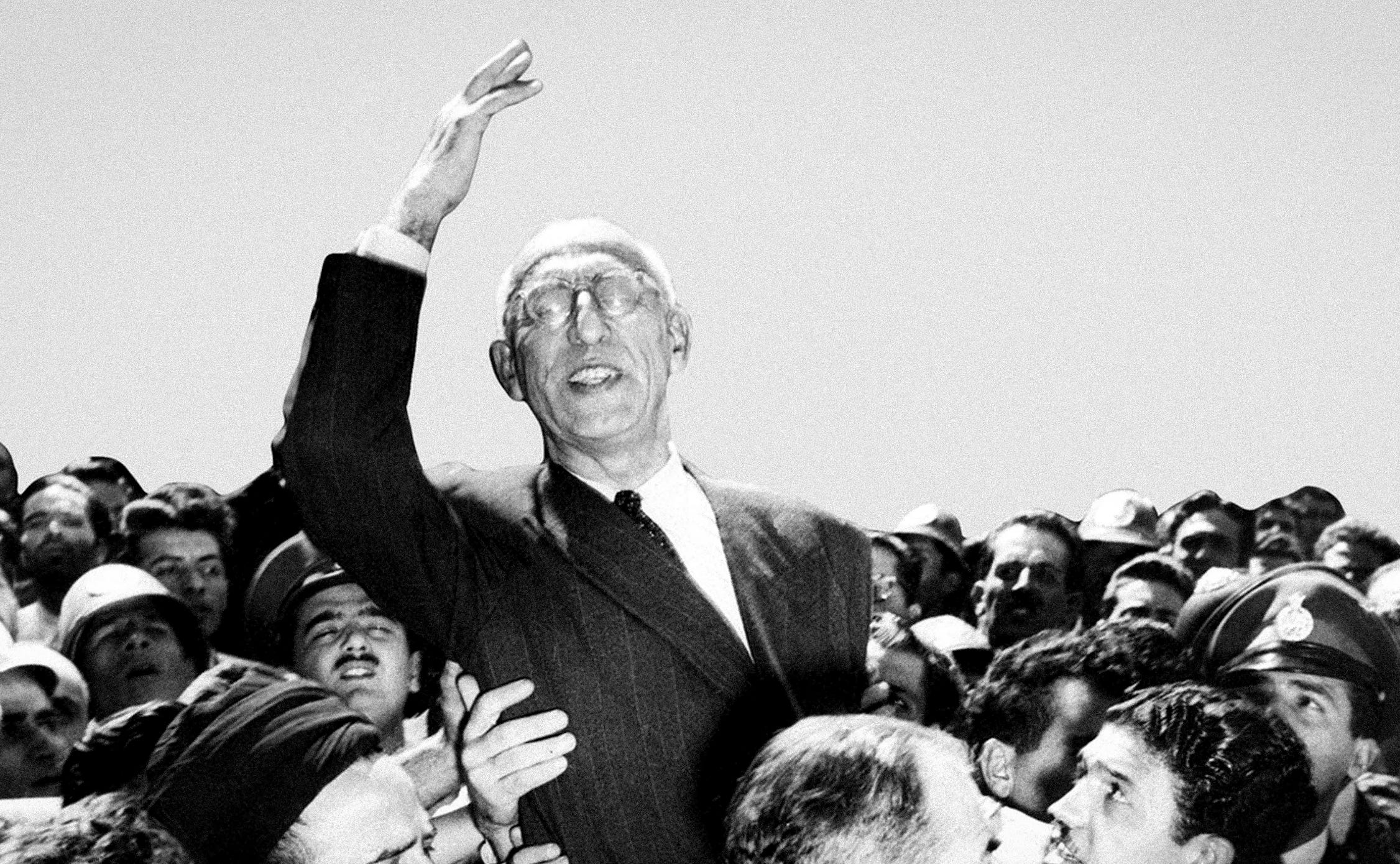
The 1953 overthrow of Prime Minister Mohammad Mossadegh grew out of a struggle over control of Iranian oil that began half a century earlier.

Tehran was already awake when the news reached Kermit Roosevelt Jr.
The coup had failed.
The plan had seemed straightforward. Officers loyal to Mohammad Reza Shah Pahlavi would arrest Prime Minister Mohammad Mossadegh, restore the authority of the monarchy, and bring an end to the nationalization crisis that had shut Iran’s oil industry for two years.
Instead, the officers sent to arrest Mossadegh had been detained. The Shah had fled the country. Mossadegh appeared stronger than ever.
Roosevelt, the CIA officer directing the operation on the ground, now faced a more immediate problem than geopolitics.
He was still in Tehran.
Washington’s instructions were clear: if the first attempt failed, the operation would be abandoned and American personnel withdrawn.
Roosevelt ignored them.
For the next forty-eight hours he moved quietly through Tehran’s political networks, meeting army officers, clerics, editors, and political brokers, trying to revive a plan that had already collapsed.
Money changed hands. Newspapers suddenly shifted their tone. Demonstrations appeared in the streets. Rumors spread that Mossadegh had turned against religion and intended to abolish the monarchy.
Crowds formed, then riots.
What looked like spontaneous unrest was, in many cases, carefully arranged.
On 19 August 1953 the balance tipped. Army units loyal to the Shah seized government buildings. Mossadegh’s house was attacked.
By evening the prime minister had been overthrown.
To understand why an American intelligence officer was hiding in a Tehran safe house trying to overthrow Iran’s prime minister, you have to go back half a century.
The Anglo-Persian Oil Company, 1901
The story begins in 1901, when the ruler of Persia granted a sweeping oil concession to a British financier named William Knox D’Arcy.
The agreement gave D’Arcy the exclusive right to explore for oil across most of Persia for sixty years. In return, the Persian government would receive a modest royalty and a small share of future profits.
At the time neither side knew whether Persia actually possessed significant petroleum reserves. The concession was a gamble for both sides.
Seven years later the gamble paid off.
In 1908, oil was discovered at Masjed-e-Soleiman in southwestern Persia. The discovery led to the creation of the Anglo-Persian Oil Company, a firm that would quickly become one of the most important energy companies in the world.
The discovery coincided with a transformation already underway inside the British Empire. The Royal Navy had begun converting its warships from coal to oil. Oil-powered vessels were faster, more efficient, and capable of operating over longer distances. But they required a reliable supply of fuel.
In 1914, on the eve of the First World War, the British government purchased a controlling stake in the company.
From that moment forward Persian oil became a strategic asset of the British state.
The arrangement produced enormous profits for the company—and enormous resentment in Persia. The oil industry operated largely beyond Iranian control. Revenues were opaque. The Persian government received only a fraction of the wealth being extracted from its own territory.
Over the following decades that resentment hardened into a powerful political demand: that Iran, not a foreign company backed by a foreign government, should control its own natural resources.
By the middle of the twentieth century that demand would find its champion in a tall, aristocratic parliamentarian named Mohammad Mossadegh.
When Mossadegh nationalized the oil industry in 1951, he wasn’t simply rewriting a contract.
He was attempting to dismantle an imperial system that had begun with a concession signed half a century earlier.
Nationalization
When Mohammad Mossadegh became prime minister in April 1951, the crisis that had been building for half a century reached its breaking point.
For years Iranian politicians had complained that the Anglo-Iranian Oil Company—the Anglo-Persian Oil Company as it had been known before its 1935 renaming—functioned as a state within a state.
The company controlled production, accounting, refining, and exports. Iranian officials had little visibility into its finances and little authority over its operations.
Most of the profits flowed abroad.
The refinery complex at Abadan had become the largest in the world, yet the Iranian government received only a fraction of the wealth being produced on its own territory.
The demand for nationalization had been growing for years.
Mossadegh simply carried it to its logical conclusion.
In May 1951 the Iranian parliament voted to nationalize the oil industry and transfer its assets to a newly created National Iranian Oil Company.
The decision electrified the country.
In Tehran crowds celebrated what many saw as the restoration of Iranian sovereignty after decades of foreign control.
Britain saw something very different.
To London, the nationalization of the oil industry represented the seizure of one of the most important assets of the British state.
The Government of the United Kingdom responded with economic warfare. British technicians withdrew from Abadan. A global boycott of Iranian oil followed. Tankers refused to load Iranian crude. Insurance companies wouldn’t cover shipments.
Within months Iranian oil exports collapsed.
The confrontation soon became known as the Abadan Crisis.
The British government began exploring ways to remove Mossadegh from power.
Washington initially resisted.
Officials in the U.S. State Department believed Britain had mishandled the dispute and worried that overt intervention would drive Iranian nationalism toward the Soviet Union.
Instead, the United States attempted mediation.
In the summer of 1951, President Harry S. Truman sent W. Averell Harriman, one of America’s most experienced Cold War diplomats, to Tehran in an effort to broker a compromise between Iran and Britain over the nationalization of Britain’s oil interests in Iran.
Harriman was no casual envoy.
He had served as ambassador to both London and Moscow and had spent much of the Second World War negotiating with Allied governments. Washington hoped his stature might persuade both sides to step back from a confrontation that had already begun destabilizing the global oil market.
The effort failed.
For Mossadegh, the issue was sovereignty.
Iran’s oil industry had been dominated for decades by the Anglo-Iranian Oil Company, which controlled production, refining, and export while returning only a small share of the profits to Iran itself.
Nationalization, Mossadegh argued, was simply the restoration of control over a national resource.
Britain saw something very different.
From London’s perspective, nationalization threatened one of the most valuable overseas assets of the British state and set a dangerous precedent for other oil-producing countries.
What had begun as a dispute over a concession was rapidly becoming an international crisis.
Within two years the crisis would be resolved very differently.
The Decision
The standoff that followed nationalization did not immediately produce a coup.
For nearly two years the crisis unfolded through sanctions, negotiations, and political maneuvering.
Britain pressed relentlessly for American support in removing Mossadegh.
Washington hesitated at first.
Officials in the State Department still believed Mossadegh represented a legitimate nationalist movement rather than a Soviet proxy. They worried that overt intervention would discredit the West across the developing world and strengthen the very communist movements it was meant to contain.
For a time the United States attempted to hold a middle position: supporting British economic pressure while still searching for a negotiated settlement.
That balance did not hold.
By 1953 the crisis had begun to look less like a dispute over oil contracts and more like a test of Cold War stability.
The Iranian economy had been severely damaged by the oil embargo. Political unrest was rising in Tehran. British officials warned Washington that Mossadegh’s weakening government might eventually collapse in a way that allowed the Soviet Union to gain influence inside Iran.
The political context in Washington had also changed.
In January 1953 Dwight D. Eisenhower entered the White House.
His administration viewed the Iranian crisis through a sharper Cold War lens than the previous government.
Within months American and British intelligence services began planning a covert operation to remove Mossadegh and restore the authority of Mohammad Reza Shah Pahlavi.
The plan would combine several elements: military support for pro-Shah officers, financial backing for political allies, and a coordinated campaign to shape public opinion in Tehran.
The operation received a simple internal name.
Operation Ajax.
Its execution on the ground would be entrusted to a CIA officer already on his way to Tehran.
His name was Kermit Roosevelt Jr.
The Coup
By the time Roosevelt arrived in Tehran, the outline of the operation had already been approved in Washington and London.
What remained uncertain was whether it would work.
The plan relied on several moving parts. Officers loyal to the Shah would move against Mossadegh. Political allies would mobilize support in parliament.
At the same time, a campaign would begin inside Tehran’s information environment designed to weaken Mossadegh’s position and create the impression that the country was turning against him.
Money moved quietly through the city.
Editors received payments to publish stories attacking Mossadegh and questioning his loyalty to Islam. Clerical networks were encouraged to warn that the prime minister intended to undermine religion and abolish the monarchy.
Demonstrations appeared in the streets, followed by counter-demonstrations.
Some were genuine expressions of political anger.
Others were carefully organized.
The aim was not simply to remove Mossadegh but to make his removal appear inevitable.
The first attempt failed.
In mid-August 1953, officers sent to arrest Mossadegh were themselves arrested. The Shah fled the country.
For several hours it appeared that the entire operation had collapsed.
Roosevelt refused to abandon it.
Over the next two days the campaign intensified. Money flowed to political brokers and street organizers. Newspapers amplified the sense of crisis.
Demonstrations grew larger and more violent.
By the morning of 19 August 1953, the balance in Tehran had begun to shift.
Crowds filled the streets. Army units loyal to the Shah moved into the city.
Government buildings were seized.
Mossadegh’s residence was attacked and eventually overrun.
By evening the prime minister had been removed from power.
For the United States and Britain it was a successful covert intervention that restored a friendly government and reopened the path to Iranian oil.
For many Iranians it became something else entirely — proof that foreign powers would overthrow an elected government to preserve their control over the country’s most valuable resource.
The consequences would unfold slowly.
Twenty-six years later, they would return with force.
The Long Shadow
The coup resolved the immediate crisis.
Oil production eventually resumed. A new international consortium of Western companies returned to Iran’s oil fields. The monarchy of Mohammad Reza Shah Pahlavi was restored with American support.
The Shah emerged from the crisis determined to consolidate his authority.
For Washington and London the outcome appeared to confirm the effectiveness of covert action.
A hostile government had been removed. A strategic ally had been secured. The flow of oil from the Persian Gulf had been stabilized.
Iran remembered it differently.
Mohammad Mossadegh was tried for treason and sentenced to three years in prison, followed by house arrest in his village of Ahmadabad, where he remained for the rest of his life.
During his trial he offered a simple defense:
“Yes, my sin — my greater sin and even my greatest sin — is that I nationalised Iran’s oil industry and discarded the system of political and economic exploitation by the world’s greatest empire.”
For many Iranians the overthrow of Mossadegh became proof that foreign powers would not tolerate an independent government in Tehran if that government threatened their strategic interests.
The Shah’s government would rule for another twenty-six years.
Over time it grew wealthier, more centralized, and more authoritarian. Political opposition was suppressed. The security services expanded.
Economic modernization proceeded rapidly, but the political system that accompanied it grew increasingly brittle.
By the late 1970s the monarchy faced opposition from across Iranian society: religious leaders, students, intellectuals, and political activists who disagreed on almost everything except the belief that the Shah’s rule had been sustained by foreign intervention.
In 1979 that opposition converged in the Iranian Revolution, which forced the Shah from power and replaced the monarchy with an Islamic Republic led by Ruhollah Khomeini.
The revolution did not begin in 1953.
But the memory of the coup had never disappeared.
It lingered in speeches, in political rhetoric, and in the collective understanding of how Iran had arrived where it was.
For the United States and Britain, Operation Ajax had been a successful covert operation.
For Iran it became part of a longer story about sovereignty, intervention, and the power of foreign governments over the country’s most important resources.
That story did not end in 1953.
And it did not end in 1979.
The Pattern
The revolution of 1979 transformed Iran’s political system but not its geopolitical position.
The monarchy of Mohammad Reza Shah Pahlavi disappeared. The Islamic Republic emerged under Ruhollah Khomeini. Relations with the United States collapsed.
A new political order took shape in Tehran.
What did not change was the country’s strategic location.
Iran still sat beside the Persian Gulf and the Strait of Hormuz, through which roughly a fifth of the world’s oil passes.
The same geography that had drawn imperial attention in the early twentieth century remained intact.
For the remainder of the Cold War and the decades that followed, that geography ensured that Iran remained central to the politics of the region.
The resource that drew the world’s attention to the country in 1901 was oil.
The conflict that followed revolved around control of that resource and the political power that flowed from it.
Over time the technologies that defined global power changed. Empires faded. The Cold War ended.
New forms of economic and technological competition emerged.
But the underlying logic proved remarkably consistent.
When a resource becomes essential to the functioning of the modern world, the places that sit closest to it rarely escape the attention of powerful states.
In 1953 the struggle centered on oil.
More than seventy years later the technologies and industries shaping global power have changed.
The geography has not.
The story that began with a concession signed in 1901 has continued, in different forms, into the twenty-first century.
The resource changes.
The logic does not.


A masterfully narrated timeline of the 1953 crisis. It highlights the strategic desperation of both London and Washington perfectly.
I’ve been researching this same period, and I view the 1953 coup as the inevitable 'Critical Failure Point' of a parasitic structure solidified by the 1901 D’Arcy Concession. While your piece provides the perfect autopsy of the 1953 symptoms, I’ve been dissecting the root pathogen—how the dynasty’s strategic liquidation was architected long before the CIA intervened. Do you see the 1953 pivot as an intentional design or a reactive fallout? Looking forward to your thoughts.